Karoo Motorcycle Tour: Self-Guided Interior Riding
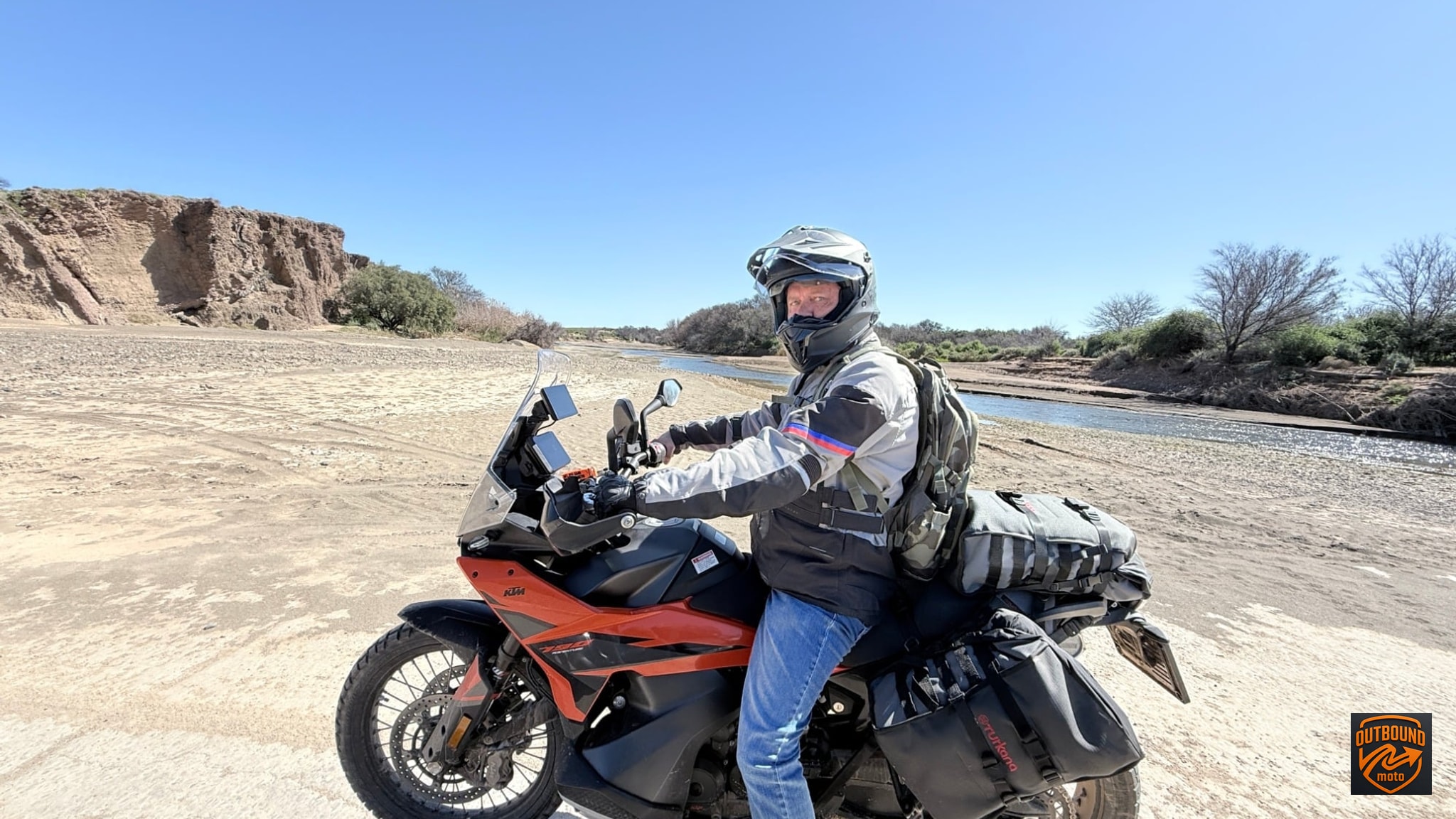
Riding the Karoo demands respect for distance, heat and self-reliance. This interior landscape is the central phase of our Cape2Karoo tour, a seven-day self-guided route that starts in St Francis Bay and loops through the Baviaanskloof, the Great Karoo and the Swartberg Pass. You ride without a guide or support vehicle, managing your own pace across tar and gravel that test both machine and rider.
We provide the KTM 790 Adventure, accommodation with breakfast, and a Garmin zūmo XT2 loaded with the GPX route. You handle fuel, meals and minor mechanical issues. This isn't a guided holiday: it's a well-planned framework for experienced riders who want the Karoo on their own terms.
The Karoo as Part of the Cape2Karoo Route
The Karoo is one section of the Cape2Karoo route, not a separate tour. Your seven days take in the Baviaanskloof, a Garden Route stretch that's mostly tar with some gravel, and this arid interior phase where distances open up and services thin out. Towns like Willowmore and Prince Albert mark the riding days here, but they're waypoints within the week, not standalone destinations.
You select the day's route on the GPS each morning and follow the line. The GPX file contains the route only, with no waypoints for fuel, food or accommodation. That's the core difference from guided touring, where someone else manages the logistics for you. See how self-guided motorcycle touring in South Africa actually works.
Every kilometre is deliberate, every stop is earned.
For context on how this interior segment compares to the Baviaanskloof or the coastal stretches, read our overview of the best adventure motorcycle routes in the Eastern Cape. The Cape2Karoo combines these environments into one week. Knowing the sequence helps you prepare for the transitions between them.
Navigating Karoo Gravel Roads on an Adventure Bike
Riding Karoo gravel on an adventure bike rewards competence over speed. The Cape2Karoo covers about 1,306 km, roughly 70% of it gravel, but surfaces shift without warning and conditions change with recent weather, grading and traffic. The road you ride today may not be the road we checked last month.
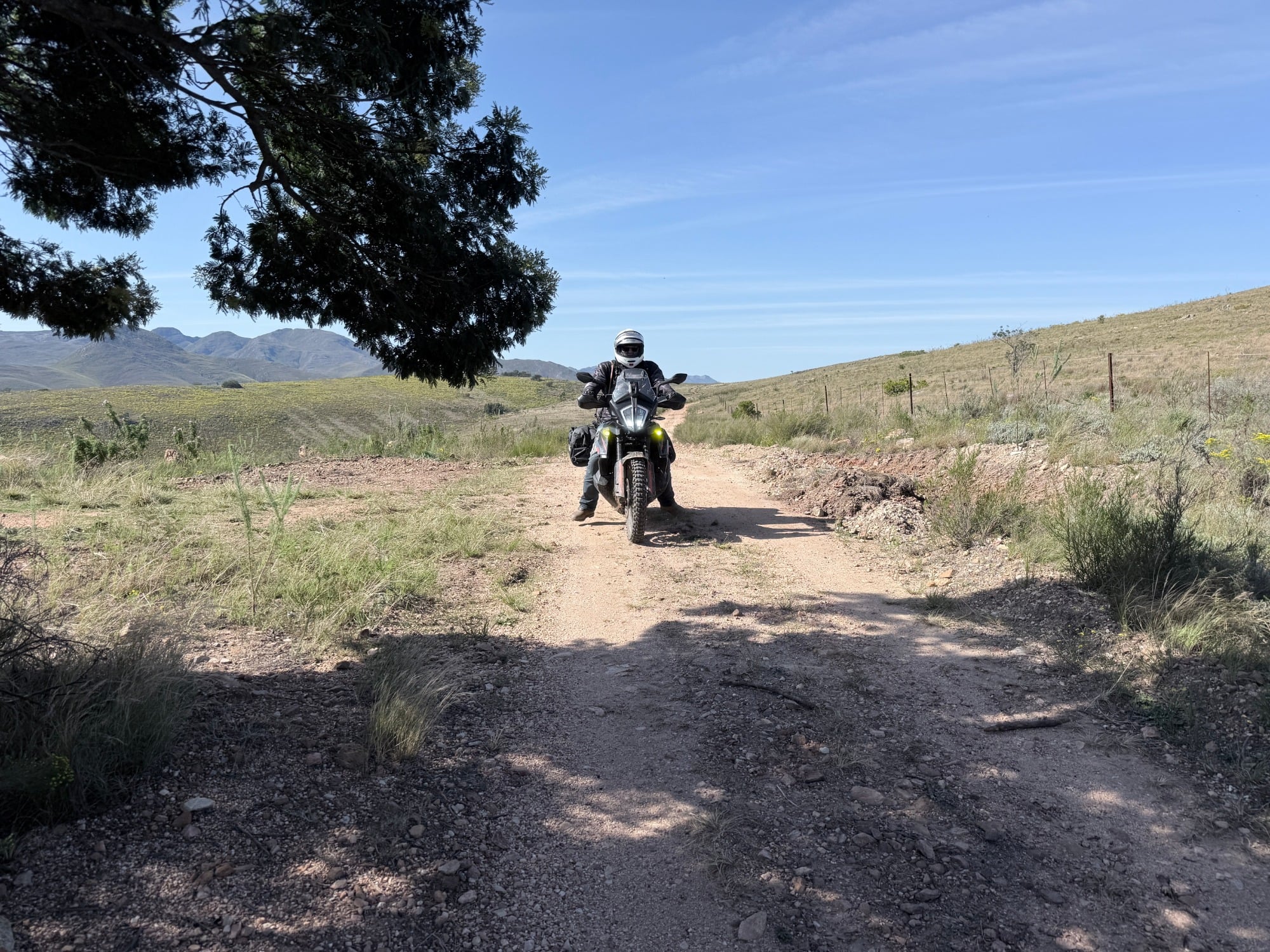
Your job is to read the terrain ahead and adjust. Tubeless tyres help manage punctures, but they don't eliminate the risk. Each bike carries a tyre repair kit and basic tools for minor roadside fixes, and with no support vehicle behind you, you'll be the one using them.
This route suits riders who are comfortable adapting to changing surfaces rather than expecting predictable conditions. The Karoo rewards adaptability, and your skill level should match that.
Fuel, Water and Isolation Logistics
Fuel stops in the Karoo interior require planning, not hope. Distances between filling stations vary, and rural outlets keep unreliable hours. Monitoring your range and refuelling when the opportunity comes up is on you, because running dry out here creates genuine risk.
Water demands the same discipline. Heat and exertion dehydrate you faster than many riders expect, especially when wind noise masks thirst. Carry more than you think you need, and drink before you feel thirsty.
The GPX file contains the route only, with no waypoints for fuel, food or accommodation. You navigate service stops by town name, local knowledge and observation. That's intentional: we give you the riding line, you manage the logistics that keep you moving through it. For a breakdown of what's included versus what you budget separately, see our adventure motorcycle tour cost breakdown.
Isolation is a feature of this terrain, not a bug. There is mobile coverage or Wi-Fi on most of the route, but some stretches have none, and towns sit far apart. You ride through silence and open space, and your preparation has to account for both.
Riding the KTM 790 Adventure in Remote Terrain
The KTM 790 Adventure is the machine you ride, set up for this specific work. It runs tubeless tyres and carries a rack-less soft pannier system with 60 litres across three 20-litre compartments. That keeps weight low and central, which matters when gravel demands constant correction.
Each bike carries a tyre plug kit, pressure gauge, pump, tool kit, duct tape, cable ties and blue thread-locker for minor roadside fixes. These are standard, because remote riding requires self-sufficiency. You use them when you need them, and you keep riding when the fix holds.
A KTM service centre services the motorcycles on the factory schedule, and we run our own checks between tours. Reliability matters out here, and maintenance isn't negotiable. Full specifications and setup details are in our dedicated article on the KTM 790 Adventure, including why this platform suits Eastern Cape touring.
The bike serves the route, not the other way round. You book the experience; the motorcycle is the tool that makes it possible.
How Breakdown Support Works
We don't provide satellite communication equipment. Riders rely on 24/7 phone support for diagnostics and backup. When something fails, you call us and we ask questions to diagnose the problem remotely. Many issues get sorted through guided troubleshooting, and you're back on the road without waiting for physical assistance.
If the phone diagnosis doesn't fix it, we drive out with a spare motorcycle on a trailer to repair or swap your bike. Our response is immediate; arrival depends on distance. We carry tools and parts to attempt the roadside repair first, and we swap to the spare if we can't complete the fix on site.
This depends on mobile coverage. If you break down in one of the gaps, you may need to wait for a passing motorist or move to where you have signal, if it's safe to do so. If you want contact everywhere, bring your own satellite messenger.
Our support is real, but it works within the limits of phone coverage and road access, so we don't quote fixed response times.
Seasonal Conditions and Rider Requirements
Tours run all year round. October to April is drier and offers better riding conditions, but we operate outside those months too, without restriction. Weather in the Karoo is variable regardless of season, so you prepare for heat, cold, wind and rain whenever you ride.
You must be at least 25 years old and hold a full motorcycle licence for at least two years. Pillions aren't permitted. These requirements exist because self-guided remote riding demands proven competence, and we check eligibility before confirming any booking.
Review the Cape2Karoo route details to confirm this itinerary matches your experience. Check that your licence tenure meets the minimum before you enquire. This tour suits riders who've managed similar distances and conditions on their own, and who know what self-guided means in practice.
Frequently Asked Questions
What happens if I break down where there is no mobile signal?
Most of the route has mobile coverage, but there are gaps. If you break down in one, you may need to wait for a passing motorist or move to where you have signal, if it's safe to do so. No satellite communication equipment is provided, so if you want contact everywhere, bring your own satellite messenger. Once you reach us, we begin phone-based diagnostics immediately.
How do I find fuel stops if the GPX file has no waypoints?
You identify fuel opportunities using town names, local signage and observation while riding. The GPX provides the route line only, and managing service stops is your responsibility. Plan conservatively and refuel whenever opportunity arises, as distances between stations vary.
Can I bring a pillion passenger on the Cape2Karoo tour?
No. Pillions are not permitted on any Outbound Moto tour. All participants must be at least 25 years old and hold a full motorcycle licence for a minimum of two years, each riding their own motorcycle throughout the seven days.
What tools and spares should I expect on the rental bike?
Each KTM 790 Adventure carries a tyre plug kit, pressure gauge, pump, small tool kit, duct tape, cable ties and blue thread-locker. These cover minor roadside repairs like punctures and loose fasteners. Major mechanical failures trigger our phone-diagnosis and physical-backup protocol.